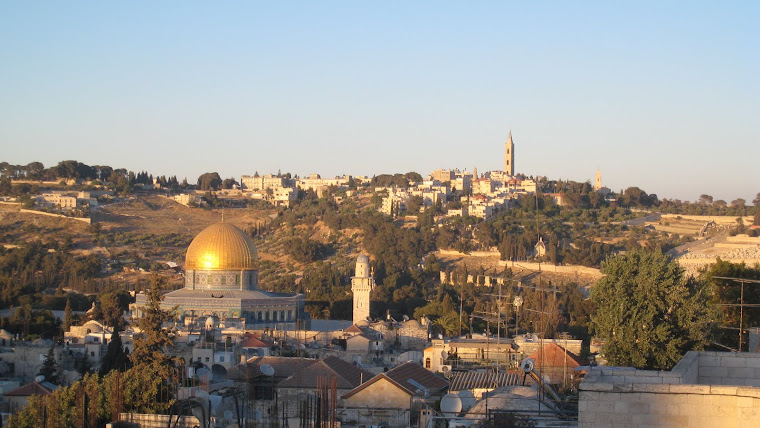
Friday, 25 June 2010

Musa continued: Disobedience of Banu Isra'il Part 2

بسم الله الرحمن الرحيم

Condemned to wander the land for their disobedience, Banu Isra'il soon found themselves longing water, food and shade.  Musa (as) prayed to Allah asking for these three things which Banu Isra'il desired and they were all provided. The Quran describes how Allah sent shade and special food down for Banu Isra'il:


"And We caused the white cloud to overshadow you and sent down on you the manna and the quails, (saying): Eat of the good things wherewith We have provided you - they wronged Us not, but they did wrong themselves". (Surah Baqarah: 57)


The Quran similarly describes how Allah fulfilled Banu Isra'il's need for water:


"And when Moses asked for water for his people, We said: Smite with thy staff the rock. And there gushed out therefrom twelve springs (so that) each tribe knew their drinking-place. Eat and drink of that which Allah hath provided, and do not act corruptly, making mischief in the earth". (Surah Baqarah: 60)

The scholars explain that the 12 springs were provided so each branch of Banu Isra'il- each branch descended from a different son of Yaqoob (as)- would even have their own place of drink, yet another mercy from Allah.

In this way, despite their prohibition from entering the Holy Land for forty years, Banu Isra'il still enjoyed blessings from Allah. However, despite such mercies from Allah, Banu Isra'il remained ungrateful to their Lord. The ultimate height of such ingratitude was to go as far as committing the most grave of sins itself, shirk (associating partners with Allah). This will be covered in the next post, inshaAllah.

Friday, 11 June 2010

Musa continued: Disobedience of Banu Isra'il Part 1

بسم الله الرحمن الرحيم

While Firawn and his army died, Musa (as) and the Banu Isra'il successfully crossed the Red Sea due to the miracle from Allah described in the last post (the splitting of the Red Sea).  Despite Allah's mercy in saving them from the people of Firawn, guiding them out of Egypt and even the miracle of the splitting of the Red Sea, Banu Isra'il would show ingratitude to their Lord.

After saving them from Egypt and the tyranny of Firawn, Allah blessed Banu Isra'il by decreeing that they should now be the ones to inhabit the Holy Land, including Al Quds (Jerusalem). The following ayaat (verses) of the Quran are examples referring to Banu Isra'il being commanded to enter the Holy Land:


"Remember when We said, 'Enter this town and eat freely there as you will, but enter its gate humbly and say, "Relieve us!" Then We shall forgive you your sins and increase the rewards of those who do good'". (Surah Al Baqarah: 58)

and

"My people, go into the holy land which God has ordained for you- do not turn back or you will be the losers" (Surah Al Ma'ida: 21)

When they arrived at the outskirts of the Holy Land Musa (as) commanded Banu Isra'il to enter it (as per the ayah above). Banu Isra'il, however, refused. Their response to the command of Musa (as) was:

"They said, 'Moses, there is a fearsome people in this land. We will not go there until they leave. If they leave, then we will enter". (Surah Al Ma'ida: 22)

Despite the general disobedience of Banu Isra'il, two men amongst them were of true faith. They advised the people to obey Musa (as) and put their trust in Allah to be victorious:

"Yet two men whom God had blessed among those who were afraid said, 'Go in to them through the gate and when you go in you will overcome them. If you are true believers, put your trust in God. " (Surah Al Ma'ida: 23)

Banu Isra'il refused to accept this naseeha and such was their disobedience that they gave their prophet, Musa (as), the following verdict on the situation:


"They said, 'Moses, we wil never enter while they are still there, so you and your Lord go in and fight, and we will stay here' " (Surah Al Ma'ida: 24)

How painful must this disobedience have been to Musa (as)! Despite being saved from Firawn by the mercy of Allah and being blessed in the command to enter and inhabit the Holy Land, Banu Isra'il were not willing to exert themselves to reap such weighty rewards. Instead they wanted to sit back and expected everthing to be handed to them without any effort on their part. Facing such complete disobedience from his people, Musa (as) turned to Allah at this difficult time and made the following supplication:


"He said, 'Lord, I have authority over no-one except myself and my brother: judge between the two of us and these disobedient people'". (Surah Al Ma'ida: 25)

For their complete disregard for the command of Allah and their prophet, Allah punished Banu Isra'il by prohibiting them from entering the Holy Land in the following way:

"God said, 'The land is forbidden to them for forty years: they will wander the earth aimlessly. Do not grieve over those who disobey'". (Surah Al Ma'ida: 26)

Although they would spend the next forty years wandering in the land prohibited from entering Al Quds, Allah nevertheless still showered many blessings on Banu Isra'il.  Some of these will be covered in the last post inshaAllah.

Sunday, 6 June 2010

Musa (Moses)

بسم الله الرحمن الرحيم

As it was mentioned in the last post, the progeny of Prophet Yusuf (as) lived in Egypt until the time of Prophet Musa (as). The descendents of Yusuf (as) were known as Banu Isra'il (the Children of Israel, Israel being Prophet Yaqoub). Banu Isra'il had faced persecution at the hands of the Egyptians and during the time of Musa (as) this persecution was at its height.

Allah told his prophet Musa (as) to give dawah (invitation to Islam) to Firawn (Pharoah) and his people. However, despite being shown clear signs by Musa (as) and being sent ayaat (signs) by Allah, they refused to believe.

Due to the disbelief of Firawn and his people Allah revealed to his Prophet Musa (as) to take the Banu Isra'il out of Egypt and towards the Holy Land where they would be free from tyranny and oppression. The story of how Musa (as) and the Banu Isra'il were persued by the army of Firawn behind them and were faced with the Red Sea in front of them is well-known. Allah says in the Quran:


"And We revealed to Musa: 'Strike the sea with your staff'. It parted- each side like a mighty mountain- and We brought the others to that place: We saved Musa and all his companions, and drowned the rest. There truly is a sign in this, though most of them do not believe: your Lord alone is the Almighty, the Merciful". (Surah Al Shu'ara: 63- 68)

Although Musa (as) and the Banu Isra'il escaped from Egypt, they did not enter the Holy Land in the lifetime of Musa (as) as a punishment of Allah on Banu Isra'il because of their disobedience. The next few posts will cover the issue of disobedience in more detail, inshaAllah.

Yusuf (Joseph)

بسم الله الرحمن الرحيم

Yaqoub (as) was blessed by Allah to have many sons. Of these, his son Yusuf (Joseph) was also blessed by Allah to be a prophet. In a hadith narrated in Ahmad and Al Bukhari, the Prophet صلى الله عليه وسلم referred to Yusuf (as) as having the best lineage as he was:

"The noble, son of the noble, son of the noble, son of the noble, Yusuf bin Yaqoub, bin Ishaq bin Ibrahim".

Yaqoub (as) and his family lived near Al Quds, in the land of Canaan. The turning point came when Yusuf (as)'s brothers plotted to kill him because they were jealous of their father's love for Yusuf (as). The story of Yusuf is a long and beautiful one and is narrated in an entire surah in Quran, named Surah Yusuf after him. Those who want to know the full story should read this surah.

The plot to get rid of Yusuf (as) failed. His brothers tried to get rid of Yusuf (as) by throwing him in a well, but Allah had other plans. The young Yusuf was picked up by a caravan of travellers and taken to Egypt where he was brought up and where, by the qadr of Allah, years later he was eventually established in the land as ameer (leader) over the storehouses of Egypt. When a devastating famine occured people from all around the region came to Egypt seeking food (grain) as Egypt was well-prepared due to knowledge given to Yusuf (as) by Allah.

The brothers of Yusuf (as), not recognising him, were also of those who came to seek aid from him. After a series of events, Yusuf (as) finally revealed his true identity to his brothers. Allah recounts the moment when his brothers learnt of the true identity of Yusuf (as), in the Quran:


"He [Yusuf] said: 'Do you now realise what you did to Yusuf and his brother when you were ignorant? And they cried, 'Could it be that you are Yusuf?' He said, 'I am Yusuf. This [Benyameen] is my brother. God has been gracious to us: God does not deny anyone who is mindful of God and steadfast in adversity the rewards of those who do good' " (Surah Yusuf: 89-90)


After being reconciled with his brothers, the family of Yusuf came to Egypt from Canaan. The Quran narrates:


"Later, when they presented themselves before Yusuf, he drew his parents to him- he said, 'Welcome to Egypt you will all be safe here, God willing' "
(Surah Yusuf: 99)

The progeny of Yusuf (as) continued to live in Egypt from this time, until the time of Musa (as).

Thursday, 20 May 2010

Apology!


بسم الله الرحمن الرحيم

Apologies, I haven't posted in a while as I forgot the password to access my blog :-(. Alhamdulillah, finally all sorted out now so the next post should be soooon, inshaAllah!

Friday, 23 April 2010

Yaqoob (Jacob)

بسم الله الرحمن الرحيم

Yaqoob (as) was the son of Ishaq (as) and therefore the grandson of Ibrahim (as). Like his grandfather and father, Yaqoob (as) eventually settled and lived in Al Sham, in an area called Canaan. Yaqoob (as) had many children, the most famous of which was Yusuf (as), who would also become a prophet of Allah.

Tuesday, 20 April 2010

Ibrahim (Abraham)

بسم الله الرحمن الرحيم


"And We rescued him and Lut (and brought them) to the land which We have blessed for (all) peoples". (Surah Al Anbiya 21: 71)

This ayah in Surah Anbiya refers to Ibrahim (as) making Hijrah to Al Sham. Ibrahim (as) was born in Ur, in modern day Iraq. However, he left his hometown along with his wife Sarah (as) and nephew Lut (as) after his people refused to accept his many calls to Islam.

After settling in Palestine, Ibrahim (as) and his wife travelled for a time in Egypt, where they were involved in an incident with a tryant leader who tried to seduce Sarah (as) because of her beauty. However, due to the dua of Sarah (as) for protection from the tyrant, he was confounded in his aim. Due to the punishments of Allah on him (because of the dua of Sarah) the tyrant was not only willing for Sarah (as) to leave Egypt safely with her husband, but he also gave her gifts including a maid, called Hajar, to encourage her departure. Ibrahim (as) later married Hajar (as), making her his second wife.

The family of Ibrahim (as) then settled in Palestine. After the birth of his eldest son Ismael (as), Ibrahim (as) made several visits to Makkah where his son was growing up. On the most famous of these occasions, he built Al Ka'bah with the help of his son, due to the command of Allah.

Despite his visits to Makkah, Ibrahim (as) remained in Palestine. Later his second son, Ishaq (as), also lived with his father in Palestine. Thus the noble land of Palestine was where Ibrahim (as) gave dawah, traded and eventually grew old and died. The graves of both Ibrahim (as) and Ishaq (as) are located in the city of Khalil, now known as Hebron. This is very near Al Quds (Jerusalem).

Ibrahim (as) is one of Allah's greatest prophets. Allah referred to him as 'Khalil' in the Quran, translating to 'intimate friend'. As all of the prophets after Ibrahim (as) are from his descendants, he is known amongst muslims as Abul Anbiya, Father of the Prophets. What a beloved place for such a beloved prophet to live and die!

Tuesday, 13 April 2010

Next post soon inshaAllah!

بسم الله الرحمن الرحيم

Unfortunately I haven't posted in a while due to being busy on other things. But Allah willing I intend to have the next post out soon. =)

Thursday, 1 April 2010

Al Quds: A Double History


بسم الله الرحمن الرحيم

Now that I've covered some of the major references in the Quran and Sunnah which highlight the importance and blessings of Al Quds, I'm going to start moving onto the history of Al Quds (Jerusalem). I'm going to do this in two ways, inshaAllah.

First, I'll trace the history of Al Quds through people, namely some of the Prophets of Allah who lived in/travelled to Al Quds. So this will essentially be a series of posts tracing the history of prophethood in Al Quds.

Second, I'll trace the history of Al Quds through events, such as the history of Banu Isra'il (the Children of Israel), Al Isra' and Al Mi'raj and events connected to the End of Time (eschatological events)

Allah willing, this is where we're heading.

Tuesday, 30 March 2010

Lessons From Ahadith 2

بسم الله الرحمن الرحيم

Here are five ahadith (sayings of the Prophet Muhammad, peace and blessings be on him) specifically about the virtues of Al Quds.

Example 1

Abu Umamah (ra) reports that the Prophet (peace and blessings be on him) said, "Prophethood descended upon me from/in three places: Makkah, Madinah and Al Sham. Once it is brought out from any of them, it shall never return to it". (Sunan Abu Dawud)

Another version states that the Prophet (peace and blessings be on him) said:
"The Quran was revealed in three places: Makkah, Madinah and Al Sham". (Al Tabarani)

The great islamic scholar Ibn Kathir comments that in this hadith Al Sham is referring to Bayt Al Maqdis. It's clear from this hadith that Allah Almighty blessed Al Aqsa and therefore Al Quds (Jerusalem), as He chose it as only one of three places in the world where He sent His revelation to His final Prophet, peace and blessings be upon him.


Example 2


Abu Dharr (ra) reported that he asked the Prophet (peace and blessings be on him), "O Prophet of Allah, which Masjid was built first on earth?". The Prophet replied, "The Sacred Masjid of Makkah". Abu Dharr again asked, "Which was next?". The Prophet (peace and blessings be on him) said "The Masjid Al Aqsa". "How long was the period between them?" Abu Dharr asked. The Prophet (peace and blessings be on him) said "Forty years. Apart from these, offer your prayers anywhere when it is time to pray, although excellence is in praying in these Masajids". (Sahih al Bukhari)

To clarify RasulAllah (peace and blessings on him) was not referring to any contemporary buildings in this hadith, but to the original establishment of Makkah and Al Aqsa as places of worship on this earth (more about this in later posts, inshaAllah). The fact that Al Aqsa was the second masjid (house of Allah) on earth speaks volumes about the status of Al Quds (Jerusalem).


Example 3

Abu Hurayrah (ra) narrated that the Messenger of Allah said: “Do not travel to visit any mosques except three: al-Masjid al-Haraam [in Makkah], this Masjid of mine [in Madeenah] and al-Masjid al-Aqsa [in Jerusalem]” (Bukhari and Muslim).

This hadith leaves room for no doubt. Prophet Muhammad (peace and blessings be on him) made it clear that an extended, special journey to visit any masjid is not allowed except for the three most blessed, which include Al Aqsa in Al Quds.


Examples 4 and 5


Abdullah Ibn Umar (ra) relates, I asked the Prophet (saw), "Apostle of Allah, tell us the legal injunction about (visiting) Bayt Al-Maqdis (Jerusalem)." The Apostle of Allah (saw) said, "Go and pray there. If you cannot visit it and pray there, then send some oil to be used in the lamps". (Al Bukhari)

Maymunah Bint Sa'd (ra) relates that she asked the Prophet (peace and blessings be on him), "O Prophet, inform us about Bayt Al-Maqdis (Jerusalem)". He said, "Visit it for prayer". She further asked, "If one of us cannot visit it, what should we do?" He said, "If you cannot go for prayer then send some oil to be used for its lamps, will be as if he has prayed in it". (Imam Ahmad, Ibn Majah, Sunan Abu Dawud and Al Tabarani)

The last two ahadith reveal something amazing. The blessings of Al Aqsa in Al Quds are so great, that RasulAllah (peace and blessings be on him) taught us that even if one cannot pray in Al Aqsa, they should still try to associate themselves with the masjid. In the hadith above he (peace and blessings be on him) explained that being involved in the maintenance of the masjid (sending oil for its lamps) is equal in reward to praying in the masjid, so blessed is it. The responsibilites of maintaining the masjid are not absolved for Muslims today, but how many of us are aware of this?